
















Scarlet Skips










Picture a jump rope turning at your feet. There is one button, no menu to wrestle with and no map to read. You press, you hold, you let go, and a cartoon champion sails over the rope in a sunny park. It sounds like the simplest game anyone could make. Then the ropes start to multiply, one of them catches fire, Scarlet straps on rocket shoes, and the number in the corner of your screen climbs into territory that no jump rope game has any business reaching.
Scarlet Skips is a one-button roguelike and score chaser about a former jump rope champion getting back on her feet, one skip at a time. Every time Scarlet levels up, the action freezes and three upgrade cards appear. You pick one, the rules of the run bend a little, and the rope keeps turning. Some cards make you stronger. Some make you greedy. A few will end your run if you take them at the wrong moment.
This page is the front door for anyone still deciding whether it is worth a try. It explains what it is, how it feels to play, where the depth hides, and who will enjoy it (and who probably will not). If you already play, the guides in the menu at the top of the site go much deeper, and the last section below points you to the right one.
Scarlet Skips at a Glance
| Genre | One-button roguelike and score chaser |
| Players | Single-player |
| Controls | One button: press, hold and release |
| Core loop | Skip, level up, pick one of three cards, repeat until the rope catches you |
| Session length | A few minutes for an early run, far longer for a deep build |
| Goal | Beat your own jump count, or push a run all the way to the ending |
| Tone | Silly, cartoonish and unexpectedly warm |
| Play it on | PC |
The Premise: A Comeback Told in Jumps
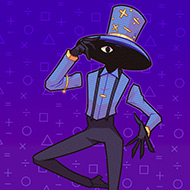
Scarlet is a young woman who used to be a jump rope champion, and when the story begins she is a long way from her best days. The opening scene shows her at home in a low place, surrounded by the leftovers of a rough stretch. Then something clicks. She heads out to the park, picks up a rope and starts to skip. That is the entire setup, and the story trusts it completely, nothing more is spelled out. There are no long cutscenes, no companions and no dialogue trees. The story lives in the way Scarlet moves, in a championship jacket that hints at a proud past, and in the store page’s cheerful promise that life is hard but can be taken one jump at a time.
Scarlet wasn’t invented just for this title. She is a recurring character from the developer’s animation work, which is why she feels like a person with a personality rather than a generic avatar. The humor is gentle: the story never asks you to take its feelings too seriously, but it never mocks them either. If you like stories about starting over that are told with a grin, this one lands.
One Button, Three Actions
Everything you do in Scarlet Skips comes down to a single button and three moments in time:
- Press Scarlet leaves the ground.
- Hold You stay committed to the jump. Later in a run, the same hold becomes something far more interesting.
- Release You let go and Scarlet comes back down, hopefully after the rope has passed.
That is all it will ever ask of your hands, and it is the reason nearly anyone can pick it up in a minute. The difficulty comes from when you do those three things. The rope is a rhythm you have to read rather than memorize, because every card you pick changes it. Higher jumps mean longer flights, extra ropes add extra beats, and faster ropes leave less time to think. A jump that cleared the rope can still lose you the run if you land at the wrong instant. Players tend to describe it as easy to learn and stubborn to master, and that is a fair summary.
The Loop That Keeps You Saying “One More Run”
A run in Scarlet Skips has a simple heartbeat. Every successful jump earns experience. When enough experience builds up, Scarlet levels up and the game pauses. Three random cards appear, you take your time, you choose one, and the action resumes with your new advantage (or your new problem) in effect. When the rope finally catches Scarlet, the run ends and you start over with a clean slate. Nothing you collected carries over. The only thing that persists is what you learned.
That structure is the heart of what makes it hard to put down. Random offers mean every run develops differently. One attempt might hand you height and luck early and let you cruise. The next might bury you in rope cards before you have found your rhythm. You are never following a script; you are reading whatever the level-up hands you and making the best decision you can with it. The pause at every level-up turns each choice into a small moment of calm inside a tense loop, and it gives the whole loop a satisfying pattern of tension and release. An early failed run costs only a few minutes, so the next attempt is always one press away.
Why Three Random Cards Works So Well
Roguelikes live or die by their choices, and Scarlet Skips uses a very simple format: three cards, pick one. It sounds modest, but it does three things at once. It keeps every decision small enough to make in seconds. It makes each pick a real trade-off, because the two cards you leave behind are gone until the next offer. And it forces you to adapt, since you can only build from whatever the offer puts in front of you. You never get the perfect run you planned, and that turns out to be the point. The satisfaction comes from making a mediocre offer work, from spotting the one card in a bad hand that quietly fixes your problem, and from the moment a gamble pays off because you prepared for it.
The Upgrade Cards: Ten Ways to Help or Hurt Yourself
Each level-up draws three cards from a pool of ten. Cards stack, and they interact with one another, which is where the game gets its personality. Rather than listing every card here (the All Cards page does that, with rankings), this is the shape of the decisions you will be making.
Getting Higher
Jump height is the most reliable card in the deck. Higher jumps keep Scarlet in the air longer, which lets her clear more loops before she has to come down. That means more experience and safer landings. The catch is subtle: a longer flight changes when Scarlet meets the rope again, so your timing has to change with it.
Getting Luckier
Luck sounds like the dullest card of the bunch and turns out to be one of the quietest powerhouses. It gives every successful jump a chance to award bonus experience, and it works once per rope, so it grows stronger as your setup grows wider. Enough of it and a single jump can trigger several level-ups in a row.
Adding Ropes
Extra ropes raise your score and can act as a cushion, since a hit on one of them does not automatically end the run. But every rope is also another rhythm to track with the same single button. A separate card makes the ropes spin faster, and that one is pure temptation: more score every second, less time to think. Knowing when to stop adding pressure is a skill of its own.
Taking Flight
Rocket shoes let Scarlet float when you hold the button, and their fuel refills whenever she levels up. That single detail is responsible for one of the run’s most memorable tricks: builds in which Scarlet simply stops landing, chaining level-ups in the air and climbing higher with every one. Players consider it the strongest card in the game, and the Rocket Shoes guide explains how to build the loop on purpose.
Playing With Fire
The fire cards are the game’s clearest gamble. Setting a rope alight makes it worth more score on every jump, but touching a burning rope ends the run instantly. Other cards can put the flame out or wrap a rope in a protective cover that absorbs one mistake. Used with a stable build and a safety net, fire is a thrilling way to multiply your score. Used out of greed, it is the fastest way to lose a great run.
The design trick is that no card is simply good. Every one of them either costs you something or asks you to be better at something. The best players are not the ones who memorize an order of upgrades. They are the ones who read each offer honestly and pick the card that fits the run they are actually having.
A Decision You Will Face
Imagine your build is running smoothly. You have a few ropes, a couple of shields and a comfortable rhythm, and the next level-up offers fire, another rope and more luck. Fire promises the biggest jump in score. The rope adds one more pattern to watch. Luck does nothing you will notice this minute. The right answer depends on how steady your last landings felt, whether every rope is covered and how many level-ups you are getting per jump. When you are unsure, the honest answer is often the boring one, and learning to pick it is half the game.
A Run From the Inside
The first minute feels like a rhythm game with training wheels. There is one rope, one beat, and your thumb finds the pattern quickly. The first few cards usually make Scarlet jump higher, and the run feels almost gentle. You are learning the tempo, and it’s happy to let you.
Then the extra ropes arrive and the whole thing changes genres. What used to be a rhythm becomes juggling, and your eyes start doing three jobs at once. This is the first point where most players lose a run they thought they had under control, and it is also the point where the run becomes truly engaging, because you are now making decisions about how much pressure you can handle.
Somewhere in the middle, if the offers cooperate, you find the rocket shoes and discover the game’s best moment. You level up while Scarlet is still in the air, the fuel refills, and she simply does not come down. You stop watching the rope and start watching the next level-up. The camera and the scenery react to how far you have climbed, and the run starts to feel like it has escaped the park entirely.
Late in a strong run, things get gloriously chaotic. Dozens of ropes can fill the screen, so many that they nearly hide Scarlet completely. Fire may be in play. Your build is either humming along perfectly or one careless landing away from collapse. And then, sooner or later, a rope catches her, an animation plays, and you are already reaching for the button to start again.
What Changes After the First Few Hours
Most players notice their focus shifting. At first you are playing the rope: thumb, rhythm, landing. Then you start playing the cards, reading offers and planning a level-up or two ahead. Eventually you are playing the build, watching the pace of your level-ups the way a mechanic listens to an engine. Each stage feels like discovering a new game inside the same one, and the shift usually happens without ever calling attention to itself. That quiet escalation makes Scarlet Skips feel bigger than it looks.
How Hard Is It, Really?
Honest answer: it is easy to start and hard to finish. Early runs are short, and losing quickly is completely normal. The game does not ask for lightning reflexes or a memorized pattern. It asks for timing and judgment. Timing, because the rope keeps changing as your cards change it. Judgment, because it constantly offers you more power in exchange for more risk, and it is very good at punishing greed.
Two things soften the difficulty. First, an early failed run is over in minutes, so mistakes are cheap and every attempt teaches you something. Second, it pauses at every level-up, so you never have to make a card decision under pressure. The hardest thing it asks of you is patience: taking the boring, stable card when a flashy one is on offer, and trusting that the flashy one will be better a few level-ups from now.
The Finish Line
A game like this could easily be endless, but Scarlet Skips has a finish line, and it changes how the whole thing feels. Reaching it takes a deliberate build and a long, steady climb rather than luck, and the reward is short, silly and cheerful instead of a boss fight or a plot twist. It works because the journey is the fun part. You are not solving a mystery; you are seeing how far a stubborn jump rope champion can go when you stop letting the rope decide. We keep the details out of this page on purpose. If you want the full route, there is a guide marked with a spoiler warning: The Ending.
What Makes It Different From Other One-Button Games
One-button titles usually fall into two camps. The first is the pure reflex test, where the challenge is fixed and your only job is to survive it for as long as you can. The second is the incremental game, where numbers grow and you barely play at all. Scarlet Skips sits in the gap between them. The rope is a real timing test, but you also choose how that test changes, card by card. In a sense you are the run’s difficulty designer, deciding whether your run becomes safer, richer or wilder. That is why two players can talk about the same title and describe completely different experiences, and why a run that goes wrong usually feels like your own decision rather than the run’s unfairness.
The Depth Under the Silliness
It is easy to underestimate Scarlet Skips from a screenshot. Underneath the cheerful animation is a system that rewards planning, experimentation and a willingness to fail. Cards interact in ways the game never explains: luck gets stronger with more ropes, rocket shoes get stronger with more level-ups, and fire is only as safe as the shields around it. Players have worked those relationships out by trial and error and shared what they found.
The result is a system where two runs with almost identical cards can feel completely different depending on the order you took them, and where a build that looks weak on paper can become brilliant with the right combination. Scores can climb to numbers that look like typos, and players have reported runs that reach millions of loops. There is a real difference between surviving and building, and it’s at its best once you make that shift.
Beyond the cards, there’s also a small but lively culture of self-imposed rules that has grown up around the game. Because skipping a card is always an option, players invent their own restrictions: no extra ropes, no rocket shoes, no fire, only height and luck. Each rule set turns the same run into a different puzzle. If the standard runs stop challenging you, an invented rule is the cheapest new content there is.
Four Ways to Play
Scarlet Skips does not force one style on you. Most players drift between these:
| Style | What it feels like |
|---|---|
| Quick sessions | Short runs, quick lessons and a strong pull toward “one more try” |
| Score chasing | Tuning a build until Scarlet barely lands, then stacking points on top |
| Ending hunting | A long, careful climb toward the finale |
| Self-made challenges | Familiar systems under new rules |
Meet the Main Character
Scarlet

Scarlet carries the game almost alone. There is no rival, no coach and no sidekick, and she does not need them. She tells the story with body language: the slump of the opening scene, and the sad look at the camera when a rope stops under her feet. She is also gloriously durable. She can fall from great heights without a scratch and pull a door open with surprising force, and all of it is played as ordinary cartoon logic. That logic is exactly what lets the ending get as ambitious as it does.
The game carries a store-page notice for suggestive themes and revealing clothing, and its animation leans into an exaggerated, playful style. It is worth knowing that before you launch it in front of other people, or on a work screen.
Looks and Feel
Scarlet Skips is a 3D title with a cartoon presentation, and the animation is its calling card. According to the developer, Scarlet’s movement blends dozens of animations with procedural systems, so she reacts to what is happening in the run rather than replaying one fixed jump. You can feel it in the small things, like the moment the rope stops dead under her feet after a bad landing and she looks down at it, then sadly at you.
Failure is part of the show. There is more than one way to lose, and each has its own animation, from a plain trip to a burnt statue in a pained pose. They are funny, and they are also useful, because each one tells you what went wrong. The humor extends even to its only achievement, which is awarded for failing your very first jump. That should tell you most of what you need to know about its sense of humor.
Who Will Love It, and Who Should Skip It
| Topic | You will like it if… | You may bounce off if… |
|---|---|---|
| Pace | You enjoy quick runs and instant retries | You want long, story-driven sessions |
| Controls | You think one button is a feature, not a limitation | You want a wide range of moves and actions |
| Progress | You like building a run from random offers | You want permanent unlocks, outfits or a growing collection |
| Difficulty | You are happy to lose your way to mastery | You dislike randomness affecting your options |
| Content | You like a compact, focused arcade game | You expect many modes, levels or characters |
| Tone | You like cheerful, slightly cheeky cartoon comedy | You want a serious or realistic experience |
The trade-off is worth being clear about. Scarlet Skips is compact by design. There are no unlockable outfits, no extra modes and no meta-progression that carries over between runs. The reward is the run itself: a build you assembled, a landing you nailed, a number you have never reached before. For players who love that loop, it is a lot of game for its size. For players who need a constant stream of new content, it may feel thin, and it is better to know that going in.
Your First Session: Three Small Rules
Frequently Asked Questions
Do I need fast reflexes?
Not really. It’s about reading the rope and choosing the right moment, not about twitch speed. Good judgment about your cards matters more than quick fingers.
Can I play in short sessions?
Yes. Early runs last a few minutes, and the pause at every level-up makes it easy to stop and think. Deep runs can go on for a long time, but you choose whether to chase them.
Is there a story to follow?
A small one. It is told through animation and a few scenes rather than dialogue, and it is short and warm. If you want a big narrative, this is not that game.
Will I run out of things to do?
There are no unlockables, so the depth comes from builds, score goals, the ending and challenges you set yourself. If those appeal to you, there is plenty to explore. If you need permanent progression, you may miss it.
Is it a rhythm game?
It shares some DNA, since you are reading a repeating pattern, but the pattern changes with every card you pick. It is closer to a timing-based roguelike than to a straightforward, rhythm-only experience.
Is it suitable for everyone?
It carries a notice for suggestive themes and revealing clothing, and its animation style is playful and exaggerated. Consider that before playing around others or recommending it to younger players.
Scarlet Skips asks for one button and a little patience, and it gives back a surprising amount: a run you build yourself, a rope that keeps getting stranger, and a small comeback story that tells itself one jump at a time. If that sounds like your kind of game, start with the How to Play guide, then follow the Beginner Build for your first few runs and see how high a jump rope can really take you.
Comments
There are no reviews yet. Be the first one to write one.
