













Math Climber



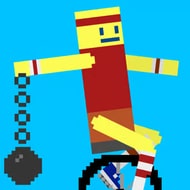


Math Climber looks like a straightforward jumping game with a school-quiz gimmick bolted on, but it plays like two separate skill tests running at the same time, where being slow or wrong at either one sends the climber straight back to the bottom of the mountain.
Two Kinds of Pressure, One Fall Condition
Climbing the mountain in Math Climber requires a pencil-jumping mechanic to move between platforms, which on its own would be a fairly standard precision-platforming challenge. What changes the equation, literally, is that arithmetic questions — addition and subtraction among them — appear as the climb continues, and answering too slowly or incorrectly causes an immediate fall. The platforming and the math aren’t sequential phases; they’re happening on top of each other, so a player mid-jump still has to be ready to process an equation the instant it appears.
That overlap is the entire design idea. A player who’s strong at mental math but sloppy with jump timing falls just as often as one who’s a precise platformer but slow at arithmetic — Math Climber doesn’t let either skill compensate fully for weakness in the other, since both are graded independently and either one failing ends the climb immediately.
One Mistake, Back to the Bottom
There’s no partial credit and no mid-climb checkpoint — a single wrong answer or a missed jump sends the climber all the way back to the start of the mountain, regardless of how much height had already been gained. That full-reset punishment is notably harsher than many precision platformers, which more commonly respawn a player at the last safe platform rather than erasing the entire run’s progress.
Difficulty scaling works on two axes simultaneously as the climb continues — platforming sections get tighter and more demanding of exact jump timing, while the arithmetic questions themselves increase in complexity, moving beyond simple single-digit addition into problems that take a genuine beat longer to solve under the same time pressure that was manageable earlier in the run.
The full reset condition changes how players approach risk compared to a game with forgiving checkpoints. Rather than pushing for height and accepting occasional falls as a normal part of learning a section, players tend to slow down noticeably once they’re past the point their previous best run reached, since a fall there costs the entire climb rather than just the recent progress since a checkpoint.
What newer players get wrong first
Treating the arithmetic questions as a pause from platforming, rather than something to prepare for while still mid-jump, is the most common early mistake. Since a question can appear at any point during the climb, players who mentally switch fully into “jump mode” and only start thinking about math once a question actually shows up lose valuable reaction time compared to those who stay ready for either demand at any moment.
Math Climber’s core appeal comes directly from refusing to let either half of its design — the pencil-jumping or the arithmetic — become the easy part, and the full-mountain reset on a single mistake is what keeps that dual pressure from ever fully relaxing once a climber has real height to lose.
Comments
There are no reviews yet. Be the first one to write one.
