






Two Button Bounce


What happens when two auto-running characters need to reach the same key and the same exit, but only one player is actually watching both of them? In Two Button Bounce, usually a wall bounce mistimed by a fraction of a second sends one hero off-screen while the other is left stranded on the wrong side of a gap.
One Button Each, Constant Momentum
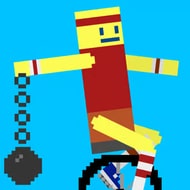
Both characters run automatically — there’s no stopping, no reversing direction on the ground. The only input either player has is a single jump button, and that jump doesn’t just launch the character upward, it also sends them into a wall bounce that flips their running direction. Player one typically uses the W key to control the orange character, and player two uses the Up arrow key to control the blue one, though a single player can run both keys at once and manage both characters solo.
Because the characters never stop moving on their own, timing a jump means anticipating a wall a beat before you reach it, not reacting once you’re already touching it. A jump thrown a moment too late still bounces off the wall, but the character has already lost height or distance it would have kept with a cleanly timed jump — which compounds across a level that expects several bounces in a row.
The Actual Goal: Key, Then Exit
Each level only needs one of the two heroes to reach the key and carry it to the exit — the other character doesn’t have to finish, but getting them killed or stuck often blocks the path the surviving character needed. Spikes, moving platforms, and gaps that drop a character off the bottom of the screen all end that character’s part of the run, so the real puzzle is routing at least one hero safely through hazards that are usually positioned to catch whichever character isn’t currently being watched closely.
Levels increase in complexity gradually, introducing new hazard placements and tighter wall-bounce timing as they go, and the cooperative version of the game — played by two people on separate keys — tends to demand actual communication, since one player calling out “jump now” a half-second before a wall can be the difference between a clean bounce and a character falling straight through a gap that was easy to see coming from the other player’s angle but not from their own.
What solo players get wrong most
Trying to manage both characters with equal attention at all times usually backfires — since only one hero actually needs to finish, the more reliable approach is picking one character early as the “carrier” and using just enough input on the other to keep it out of immediate danger, rather than splitting focus evenly between both the whole way through.
- Jump timed just before reaching a wall produces a clean bounce with full momentum retained
- Jump timed late still bounces, but loses height and distance compared to a clean bounce
- Only one of the two heroes needs to reach the key and exit for the level to be cleared
Does losing one character end the level?
Not automatically — as long as the surviving hero can still physically reach the key and then the exit without the other one blocking the path, the level can still be cleared with only one character making it to the end.
Is the game meant to be played solo or with two people?
Both work mechanically, but the wall-bounce timing on later levels is noticeably easier to manage when two separate players are each focused on one character, rather than one player splitting attention between both keys at once.
Two Button Bounce keeps its control scheme deliberately minimal — one jump, one wall bounce — and builds every ounce of its difficulty from how tightly that single action has to be timed against walls, gaps, and a partner character that never stops running long enough to wait for you to catch up.
Comments
There are no reviews yet. Be the first one to write one.
