







Sling Kong

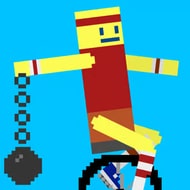

In Sling Kong you start already airborne, anchored to nothing, with a single drag-and-release input standing between your Kong and a fall back to the bottom of the screen — which matters, because the entire climb only goes in one direction and there’s no recovering height once it’s lost.
| Genre | Arcade / Climbing |
| Core Mechanic | Drag-and-release sling launches with elastic arms |
| Controls | Drag to aim, release to launch |
| Progression | Coin-based character unlocks |
Elastic Arms and Anchor Points
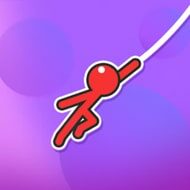
Your Kong launches itself using stretchy elastic arms, in a mechanic that plays similarly to a slingshot — drag downward to build tension, then release to fire upward and cling to the next anchor point. Timing the release matters as much as the direction, since launching too early or too late relative to an anchor’s position sends the Kong past it or short of it, and there’s no second attempt mid-air to correct course once the launch has already happened.
Obstacles line the climb in increasing density the higher you go — chainsaws, fire traps, and spikes are constant threats, and bolts that disappear over time punish players who hesitate on an anchor instead of committing to the next launch. That disappearing-bolt mechanic in particular forces a pace onto the climb; lingering too long deciding on the next move can mean the very anchor you were planning to use has already vanished.
Coins, Unlocks, and the Magic Orb
Coins collected during a climb serve as the game’s main currency, and reaching certain coin milestones unlocks new character skins to play as. A Magic Orb feature can randomly select from all of a player’s unlocked Kongs, or be limited to just their favorites, adding a layer of variety to which character shows up on a given run beyond simply picking one manually each time.
Chasing coins mid-climb creates a real tension with the safer play of just focusing on anchor-to-anchor survival — a coin positioned slightly off the direct line between two anchors tempts a riskier launch angle, and players chasing a high score have to weigh whether the coin is worth the reduced margin for error on the next launch.
What beginners consistently misjudge
New players tend to drag for maximum tension on every launch, assuming more power always means better results. In practice, an anchor point close by needs a short, controlled drag — over-launching sends the Kong past a nearby anchor entirely, missing the grab and falling with nothing to catch it. Reading distance to the next anchor before deciding how hard to pull back is a skill that matters more than raw launch power.
How difficulty escalates as the climb continues
The obstacle density increases steadily with height — what starts as occasional spikes becomes a near-constant gauntlet of chainsaws and fire traps by the upper reaches of a strong run, and disappearing bolts start timing out faster, compressing the decision window between one launch and the next.
- What happens if I miss an anchor point entirely? The Kong falls without anything to catch it, which ends the run at whatever height was reached — there’s no recovery once a launch has missed its target.
- Do disappearing bolts always vanish at the same rate? No — they tend to time out faster the higher the climb goes, which is part of why later stretches of a run demand quicker decisions than earlier ones.
- Is chasing coins worth the extra risk? It depends on positioning — a coin roughly on the direct line to the next anchor costs little extra risk, but one that requires a noticeably different launch angle can cost the run if it causes a missed grab.
Sling Kong never adds a second control to its drag-and-release launch, but the combination of shrinking margins, timed-out bolts, and coin temptation is enough to turn a game with one input into one where every single launch feels like it actually matters.
Comments
There are no reviews yet. Be the first one to write one.
