








Lava Bird



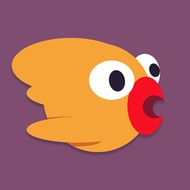
Lava Bird looks like just another tap-to-fly clone at a glance, but it plays like a moving-target shooting gallery where the thing you’re aiming at is also actively trying to knock you out of the sky.
Staying Airborne While Fighting Back
The base rhythm is familiar to anyone who’s played a tap-to-fly game before: gravity constantly pulls the bird down, and a tap or spacebar press gives it a short burst of lift to stay in the air. What Lava Bird adds on top of that foundation is combat — enemy birds fill the sky and actively chase the player down, and the same input that keeps the player airborne also fires fireballs forward to knock them out.
That overlap between movement and offense is the entire twist. A calm, tap-to-glide flappy game becomes a fast juggling act where every press has to serve two purposes at once — staying alive and clearing a path — and those two goals don’t always agree with each other. Tapping to gain height when an enemy bird is directly ahead also sends a fireball at it, which is useful, but tapping purely for survival when no enemy is in front means that fireball travels forward and can loop back into the player’s own path if they’re not tracking where it went.
Single-Player and Two-Player Modes
Lava Bird can be played solo, with the spacebar or a click controlling the single bird, or in a two-player mode where both players share the same screen. The two-player format changes the tone noticeably — enemy birds don’t distinguish between players, so a chaotic sky with two flight paths crossing constantly makes collisions with your own teammate almost as much of a risk as the enemies chasing both of you.
The meditative pace that defines most flappy-style games is essentially gone here. Instead of a steady, predictable rhythm of tap-and-glide, Lava Bird keeps players flying, aiming, and firing in one continuous motion, with barely a moment where the only thing happening on screen is altitude management.
What new players get wrong
The instinct carried over from standard flappy games — tap steadily just to maintain height — doesn’t account for enemy birds closing in from ahead. Ignoring them in favor of pure altitude control usually ends a run quickly, since a fireball needs to be aimed roughly at an incoming threat to clear it, not just fired reflexively with every tap.
- Can my own fireballs hurt me in Lava Bird? Yes — fireballs travel forward from the bird and can loop back into the player’s flight path if fired carelessly, so the same shot meant to clear a threat can become one if timing is off.
- Is two-player mode harder than playing solo? It can be, since enemy birds treat both players identically and a crowded shared screen raises the chance of a collision with your own teammate on top of the usual hazards.
Lava Bird takes a mechanic most players think they already understand and turns the single tap into a decision that has to account for altitude, aim, and a second bird’s flight path all at once, which is exactly what keeps a game built on such a familiar base from ever feeling routine.
Comments
There are no reviews yet. Be the first one to write one.
