










A Dance of Fire and Ice

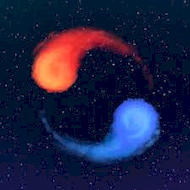
You tap once, a fraction of a second too early, and both Planets in A Dance of Fire and Ice collide in a small orange burst before the level restarts from the last checkpoint. That single missed input is the entire lesson of this game: there is no partial credit for close timing, only landed or not landed.
| Genre | Rhythm / Precision |
| Core Mechanic | Single-tap orbit switching on the beat |
| Controls | One button or tap, timed to the music |
| Content | 15+ distinct worlds, each with its own song |
The Two Planets and the Tile Path
The whole game is built around two orbs called Planets. One sits still on a tile while the other orbits around it, and your only input is telling the orbiting Planet when to lock onto the next tile in the path. Land it correctly and the roles swap, so the Planet that was orbiting becomes the anchor and the other one starts circling in turn. There is no second control, no movement stick, nothing to hold down — just the one moment where you decide the orbiting Planet has reached the next tile.
What makes A Dance of Fire and Ice demanding is that the path itself is drawn from angled tiles, and each angle changes how long the orbit takes to complete a half-circle before the next input is due. A shallow angle gives you a short window; a wide one stretches the timing out. Because the tiles chain together into a continuous track, one badly judged tap doesn’t just cost you that tile — it throws off your read of everything that follows, since your sense of the beat was tied to where the Planets physically were.
Every stage is built from patterns, and a pattern here just means a run of angles that repeats a rhythmic idea two or three times before changing. Once you recognize a pattern by ear rather than by watching the tiles scroll past, you stop reacting to each tile individually and start playing the music instead — which is the actual skill ceiling of this game.
Reading the Beat Instead of the Track
Early attempts at any level in A Dance of Fire and Ice tend to fail because players watch the Planets instead of listening to the song underneath them. The tile angles are drawn to match the music’s rhythm exactly, so a level that looks visually chaotic on a fast section is usually just a straightforward run of eighth notes once you stop trying to track the geometry and start tapping to what you hear.
This is also where the game splits players into two camps. Some treat every level as a memorization exercise, running it enough times that the tile layout becomes muscle memory regardless of the music. Others genuinely play by ear, closing their eyes on familiar sections and trusting the beat. Neither approach is wrong, but a level that has been ear-trained tends to survive a tempo change or a remix far better than one that was only memorized visually.
One thing almost every player notices the first time a level throws a sudden half-speed or double-speed section: the visual pacing of the Planets changes, but the underlying beat you were tapping to does not actually get harder — your brain just has to recalibrate what “on time” looks like for a few seconds. That adjustment period is where most restarts happen on levels that are otherwise well within a player’s skill level.
Community Language Around Timing
Players who spend real time with A Dance of Fire and Ice tend to describe failed inputs as either “early” or “late” rather than just “missed,” because the direction of the mistake tells you what to fix. Tapping early usually means you’re anticipating the beat instead of reacting to it; tapping late usually means your reaction time hasn’t caught up to a tempo increase yet. Distinguishing the two is one of the more useful habits a player can build, since the fix for each is different.
Across its 15-plus worlds, A Dance of Fire and Ice keeps introducing new songs with their own rhythmic identity, so a technique that works on a steady four-on-the-floor track can fall apart on a syncopated one. Players who’ve cleared a wide range of worlds talk about needing to relearn their sense of timing almost from scratch each time the music style shifts significantly, which keeps the difficulty curve from ever fully flattening out even after dozens of levels.
What players tend to get wrong early on
New players often try to watch the Planet that’s about to land rather than listening for the beat, which works fine on slow introductory levels and falls apart the moment tempo increases. The other common mistake is holding the input down or tapping repeatedly out of nerves near a hard section — since the game only cares about the single correctly timed tap, extra inputs at the wrong moment cause exactly the same collision as being too early or too late.
How difficulty escalates without adding new buttons
A Dance of Fire and Ice never adds a second input. Instead, difficulty comes entirely from tighter timing windows, faster tempos, and angle patterns that disguise where the beat actually falls. A late-game level can use the exact same single tap as the tutorial and still be dramatically harder, purely because the rhythm underneath it has gotten more intricate.
Is a level’s difficulty rating always accurate?
Not perfectly — some players find a nominally easier level harder than a later one simply because its rhythm doesn’t match their natural sense of timing, and this mismatch between listed difficulty and personal difficulty is something the game’s own community discusses often rather than treating the ratings as absolute.
A Dance of Fire and Ice rewards players who stop chasing the tiles with their eyes and start following the song with their ears, and once that shift happens, the Planets stop feeling like a geometry puzzle and start feeling like an extension of the music itself.
Comments
There are no reviews yet. Be the first one to write one.
